


FOLLOW US ON:

A partnership between DelAgua and the Government of Uganda to deliver free, high-performance cookstoves and long-term education and support to rural communities across Uganda.
Uganda is the next chapter in DelAgua’s mission to bring clean cooking solutions to those who need it most. Building on over a decade of proven experience in Rwanda, Sierra Leone, and The Gambia, DelAgua is now expanding its programme to Uganda in partnership with the Government of Uganda.
The Live Well programme in Uganda will reach rural households across every district in Uganda, delivering free high-performance cookstoves and education, prioritising communities where firewood remains the dominant cooking fuel and where the need for clean, efficient cooking is greatest. As the programme scales, it will reach every eligible rural household currently without access to modern energy efficient cooking.

The Live Well Uganda programme is a partnership between DelAgua and the Government of Uganda through the Ministry of Water & Environment and the Ministry of Energy and Mineral Deveopment to provide an improved cookstove, integrated with education and support for the stove’s 10-year life span. The programme will begin with an initial pilot of 10,000 stoves in southwestern Uganda, across the Ankole and Kigezi subregions of the Western Region, covering the districts of Ntungamo, Sheema, Mitooma, Kabale, Kisoro, and Rukungiri. Plans are in place to scale up by a further 200,000 stoves following the successful signing of key agreements with the Government of Uganda.
Each household will receive their stove through a distribution carried out by locally trained and employed programme staff, who will remain a consistent point of contact throughout the stove’s 10-year lifespan ensuring families are supported, educated, and empowered to make the most of their cookstove long after the initial distribution.
The programme is fully funded through carbon financing, with DelAgua’s sole source of revenue coming from the carbon credits generated through the Live Well programme. Without carbon finance, Live Well Uganda would not exist.
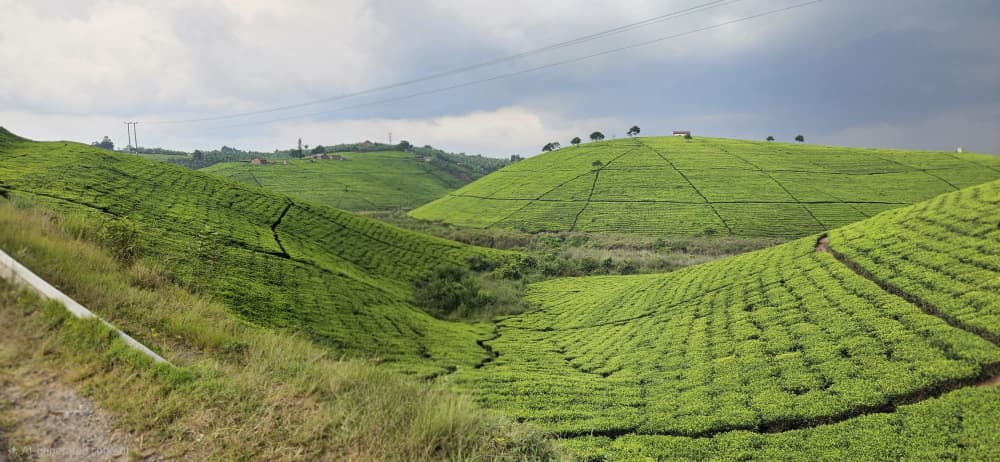
The programme delivers multiple measurable benefits. It significantly reduces indoor air pollution, improving the respiratory health of women and children who spend the most time near cooking fires. It frees hours each day previously lost to firewood collection, giving women and girls time back for education, income-generating activities, and family life. It reduces the financial burden on households through fuel savings, money that families redirect into livestock, small businesses, and their children’s schooling. And by reducing the demand for firewood, it protects Uganda’s forests and natural ecosystems from further degradation.
A Country Where Clean Cooking Can Transform Millions of Lives
Uganda is home to over 52.7 million people, the majority of whom live in rural areas and depend on subsistence agriculture. Despite significant economic progress, access to clean cooking remains out of reach for most rural households. Uganda is a Least Developed Country, with a GDP per capita of approximately $1,078 – around $2.95 per day (World Bank 2024). Half of the population is under 18, making it one of the youngest countries in the world. 73% of the population live in rural communities and are dependent on subsistence agriculture to survive. Wood energy serves the cooking purposes of 94% of the population, with biomass mostly burned in traditional three-stone stoves with very low efficiency (UBOS 2017). This has devastating consequences for the environment, nature and for the health of women and children in particular, who cook and tend the fire and so suffer the most from household air pollution. Household air pollution is linked to three of the top five causes of death in Uganda, including neonatal death, respiratory infection and tuberculosis, as well as negative pregnancy outcomes and other non-communicable diseases (Rural and Remote Health 2022).
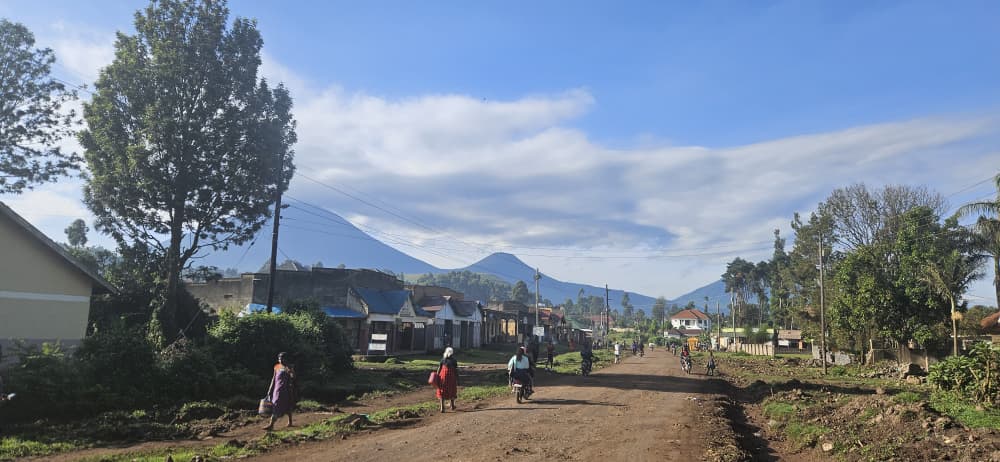
Whilst there is free primary education provision, the primary school completion rate stands at only around 52–54%, and lower secondary completion is as low as 25% for women (World Bank/UNESCO). In rural areas this is exacerbated: child labour has surged to 39.5%, equivalent to 6.2 million children, and approximately 28% of girls in rural areas drop out of school (UBOS 2021). Barriers include the cost of school supplies and uniforms, lack of teachers, poor infrastructure, and long distances to the nearest school in remote rural areas. Given the extreme poverty of rural households, child labour is often essential for survival, and girls are especially disadvantaged. Gathering wood to fuel traditional 3 stone fires is labour that keeps children from school. Other barriers include the cost of school supplies and uniforms, lack of teachers, poor infrastructure, and long distances to the nearest school in remote rural areas.
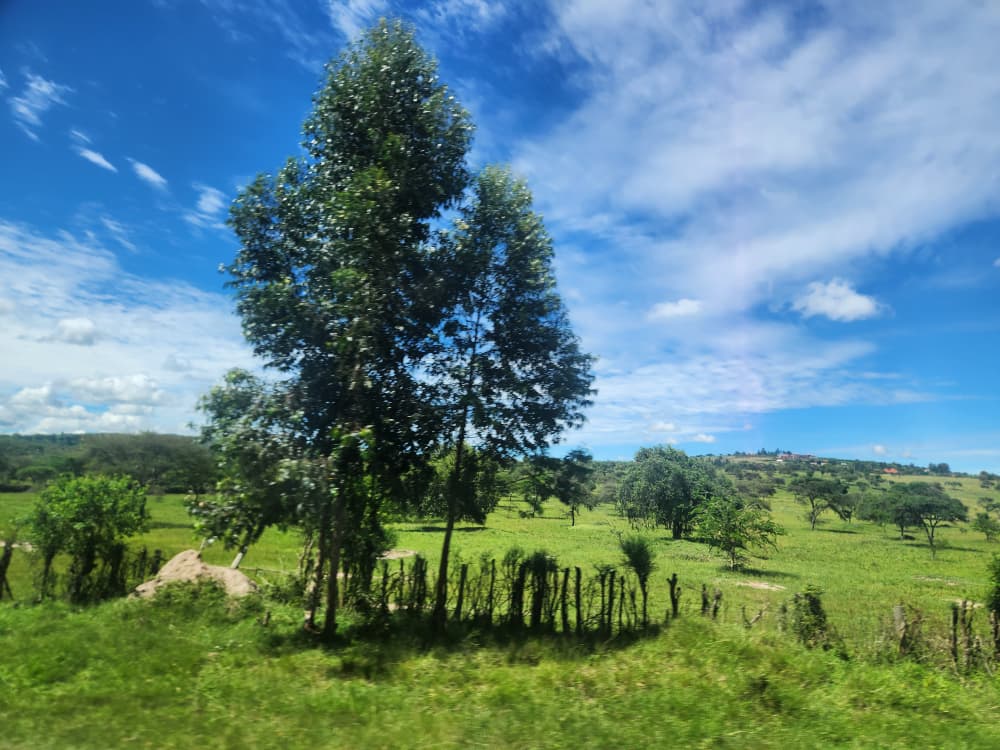
Uganda’s landscape is remarkably diverse, ranging from the snow-capped Rwenzori Mountains to the vast shores of Lake Victoria, open savannas, dense tropical rainforests such as Bwindi Impenetrable Forest, and extensive wetlands. Uganda is incredibly rich in biodiversity given its small size: more than half of Africa’s bird species can be found here, along with 345 mammal species, and the western region forms part of the Albertine Rift, which has more threatened and endemic vertebrates than anywhere else on the continent (WCS Uganda). The impact of intensive wood fuel harvesting on this environment is devastating. Uganda’s forest cover has declined from 24% in 1990 to just 9% in 2018 — a loss of 3 million hectares in just 25 years (NEMA/DevelopmentAid). Uganda is among the countries with the highest deforestation rate globally, and studies show that if the current trend continues, there will be no forests remaining in 40 years.
The consequences of traditional wood fuelled cooking are profound. Chronic respiratory illness affects women and children who breathe smoke-filled air every day. Hours are lost to firewood collection before dawn, taking time away from education, paid work, and family life. Uganda’s forests are under mounting pressure: biomass accounts for over 90% of the country’s total energy consumption, and unsustainable firewood harvesting is one of the leading drivers of deforestation and land degradation, and threatening biodiversity.
The Government of Uganda has demonstrated a clear commitment to improving the wellbeing of its citizens and to addressing climate and environmental challenges. That shared commitment is the foundation of our partnership. Together, we are bringing a proven programme to a country where its impact will be transformative reaching communities that have been denied access to clean cooking not by choice, but by circumstance.
Stove quality is paramount. DelAgua’s stove produced by BURN Manufacturing provides the step change in performance and reliability that delivers the benefits families need to transform their health and wellbeing. The Live Well stove is the world’s most advanced fuel-efficient rocket stove on the market.
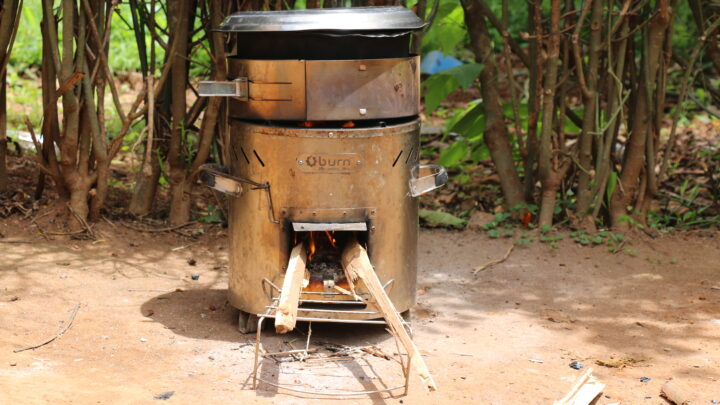
The stove requires 71% less wood than a traditional three-stone fire and burns with very high thermal efficiency. It reduces household air pollution by 73% when used outdoors. Its combustion chamber funnels all heat directly under the cooking pot, drastically reducing cooking times and fuel requirements. A pot skirt further enhances efficiency and minimises wood use. Two years after receipt, 87% of households have never had an issue with their stove, and 95% of families say that their community likes the Live Well product.
The stove burns small pieces of twig and tinder that rural families can gather without encroaching on forestry no commercial fuel purchase is required. This makes it genuinely accessible to households living below the poverty line, for whom any additional expense is simply not possible. And crucially the stove is designed to work for women and the reality of their lives meaning the fundamental behaviour change from centuries old cooking practises is welcomed, easy and enduring.
The Live Well programme delivers many benefits for families, communities and the environment.
By reducing exposure to household air pollution, the programme delivers significant health benefits while contributing to climate action through reduced carbon emissions. Families experience economic gains by spending less on fuel and save time previously spent collecting firewood. These time savings can be redirected towards education, income-generating activities and other opportunities that improve quality of life.
The programme also advances gender equality by reducing the disproportionate burden of cooking and fuel collection often borne by women and girls. The project is delivered by local community-based workers (CBWs), and they lie behind the success of the programme. It supports the development of work and skills that can strengthen livelihoods and community resilience.
As a nature-based solution, the programme helps reduce pressure on local forests, supporting life on land by conserving biodiversity and protecting wildlife habitats.
DelAgua’s Uganda project will contribute to multiple Sustainable Development Goals.
Government of Uganda
The Live Well Uganda programme is developed in partnership with the Government of Uganda through the Ministry of Water & Environment and the Ministry of Energy & Mineral Development.
This partnership reflects a shared commitment to expanding access to clean cooking across Uganda’s rural communities and is aligned with Uganda’s ambition to achieve universal access to clean cooking by 2040.
Community-Based Workers
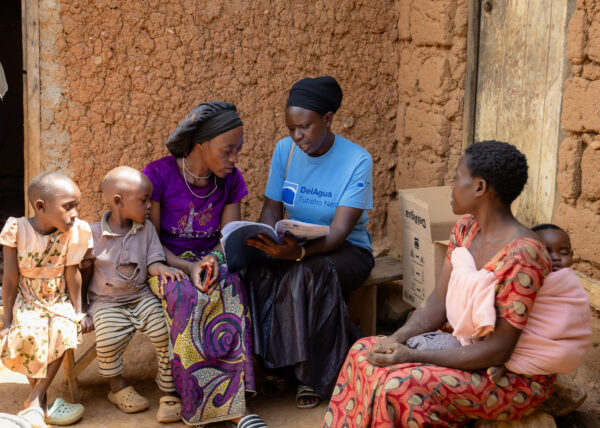
Delivery of Live Well Uganda is led in collaboration with Uganda’s Village Health Teams (VHTs), a locally recruited and trained network of community-based workers. Following the model proven across Rwanda, The Gambia, and Sierra Leone, these workers manage stove distributions, deliver household education and provide ongoing support throughout the stove’s 10-year lifespan, serving as the trusted link between the programme and the families it serves. DelAgua will initially train 60 VHTs to deliver the pilot and this will grow as the project scales.
We are proud to begin this new chapter in Uganda. This is a natural next step in our mission to ensure that no rural household is left behind in the transition to clean cooking.
Neil McDougall, DelAgua Chairman
Offset and buy Live Well carbon credits direct from us. Your purchase will fund Live Well to provide more stoves to more families and continue to tackle the global crisis of dirty cooking.
FOLLOW US ON: