FOLLOW US ON:
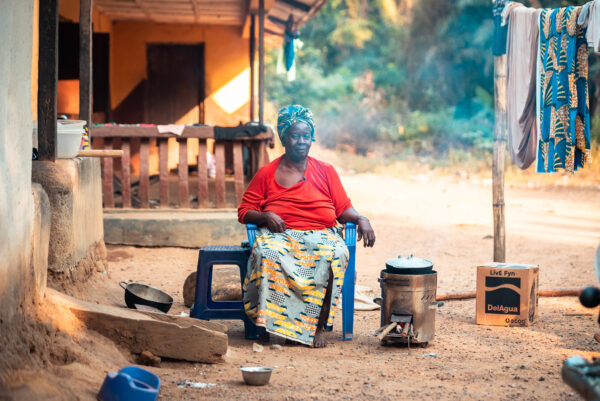
The Livɛ Fyn (Live Well) programme is a partnership between DelAgua and the Government of Sierra Leone to provide an integrated improved cookstove, education and support programme, free of charge, to the rural population of Sierra Leone. This will deliver a plethora of benefits including health, wellbeing, gender equality, climate, the environment, nature, education and economic.
Our partnership began in 2022 and initially we distributed 2,120 stoves to households in the Bo and Bonthe Districts in south Sierra Leone in February 2023. Following these initial distributions a further 25,000 stoves were distributed across 7 districts, Kono, Kambia, Bonthe, Tonkolili, Bo, Falaba and Kenema.
In 2025 we distributed a further 250,000 stoves across Kambia, Kenema, Moyamba, Koinadugu, Bo, Tonkolili and Western Rural districts.
We are currently distributing a further 42,500 across Falaba, Tonkolili, and Kono.
The overall programme goal is to provide 700,000 stoves, impacting the lives of 4,200,000 people, that’s one stove for every rural household currently without access to modern energy efficient cooking.
Sierra Leone is a Least Developed Country, and one of the 10 poorest countries in the world, with a GDP per capita of $431, that is $1.30 per day (UNCTAD 2021). 57 % of the population live in rural communities and are dependent on subsistence agriculture to survive. Over 95% of the rural population still cook on wood fuelled traditional 3 stone fires, often indoors (Sierra Leone Ministry of Energy). This has devastating consequences for the environment, nature and for the health of women and children in particular, who cook and tend the fire and so suffer the most from household air pollution (HAP). Whilst there is free primary and secondary education provision, one in five children in Sierra Leone leaves the education system at the end of primary school. In rural areas this is exacerbated: there is very poor attendance because of children’s wood gathering, cooking and other duties: given the extreme poverty of rural households, child labour is often essential for survival and girls are especially disadvantaged: only 5% of the poorest rural girls will complete their education (Unicef Sierra Leone Education Analysis 2020).
Sierra Leone’s landscape includes a flat coastal region fringed with mangrove swamps, where the first Livɛ Fyn distributions will be taking place. There are wooded hills inland and an interior plateau with rainforest covered mountains in the East. The impact of intensive wood fuel harvesting including that of mangroves is devastating for the environment. Mangroves are highly effective carbon sinks, locking away large quantities of carbon, they provide a natural defence against flooding as well as being biodiversity hotspots with very productive, biologically rich ecosystems.
The Livɛ Fyn programme is addressing these critical climate, health, education and gender inequality challenges faced by Sierra Leone by providing the rural population free access to modern energy efficient cooking combined with education and support. They have previously been denied clean cooking because of lack of affordability. Most of the rural population live well below the poverty line, on a dollar a day or less. Once living essentials are paid, a stove is completely unaffordable, even with a subsidy.
NEW INDEPENDENT RESEARCH
LIVE WELL SIERRA LEONE PERFORMANCE BENCHMARKED
The latest research conducted by 60 Decibels for Clean Cooking Alliance provides a detailed and comprehensive insight into the experiences and impact of Live Well beneficiaries in Sierra Leone.
From Warehouse to Household
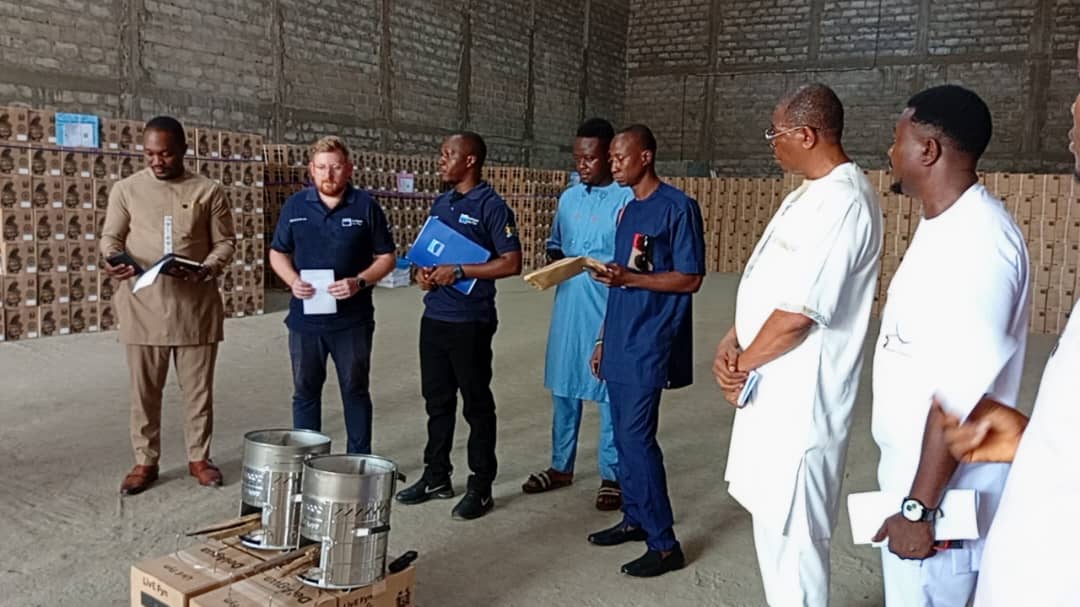
DelAgua has developed a highly efficient project implementation system that allows our Livɛ Fyn programme to reach even the most remote villages in Sierra Leone, maximising impact, prioritising integrity and optimizing staff and transport resources . This requires meticulous planning and a good understanding of local procedures, customs and cultural context.
The team executes an 8-step pre-distribution & distribution planning process to ensure a methodical approach to the complexities of Livɛ Fyn project delivery.
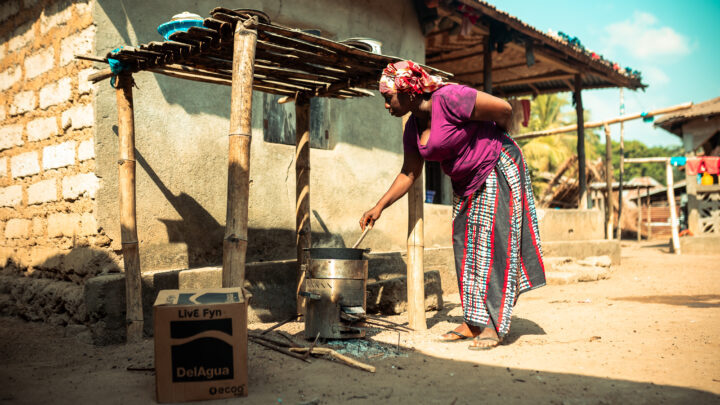
Stove quality is paramount. The stove we provide is the world’s most fuel-efficient, advanced rocket stove. A poor quality, mud constructed stove would be cheaper, but will not provide the step change in performance and reliability that delivers the benefits that families need to ensure behaviour change and transform health and wellbeing.
The stove cuts wood fuel use by 71% and burns with a very high thermal efficiency. It is designed to be used outdoors, cutting HAP. The stove is manufactured for us by BURN in Kenya, benefiting the regional African economy. DelAgua believes it is essential to provide a high-quality stove that has the best performance, is durable, and easy to use so that families and the environment gain the maximum benefit.
At present it is not possible to produce a stove of this type locally as it requires significant manufacturing technology and expertise. BURN are global leaders in the design and production of rocket stoves.
To discover more about the stove and the many benefits it delivers across 9 Sustainable Benefit Goals(SDGs) including examples from our highly successful 14 -year programme in Rwanda, click here.
The Live Well programme delivers many benefits for families, communities and the environment.
By reducing exposure to household air pollution, the programme delivers significant health benefits while contributing to climate action through reduced carbon emissions. Families experience economic gains by spending less on fuel and save time previously spent collecting firewood. These time savings can be redirected towards education, income-generating activities and other opportunities that improve quality of life.
The programme also advances gender equality by reducing the disproportionate burden of cooking and fuel collection often borne by women and girls. The project is delivered by local community-based workers (CBWs), and they lie behind the success of the programme. It supports the development of work and skills that can strengthen livelihoods and community resilience.
As a nature-based solution, the programme helps reduce pressure on local forests, supporting life on land by conserving biodiversity and protecting wildlife habitats.
DelAgua’s Sierra Leone project VCS3837 contributes to multiple Sustainable Development Goals:
Working in partnership with Government, Ministries and community leadership lies at the heart of our Live Fyn programme. By understanding their goals and needs we are best able to effectively tailor what we do to serve the people of Sierra Leone.
The Ministry of Energy is the main project partner and with whom DelAgua has a Memorandum of Understanding.
We also work closely with the Ministry of Health, Ministry of Environment and the Ministry of Youth.
DelAgua is partnering with the Ministry of Youth to access their national youth volunteer network to support effective local programme implementation. DelAgua trains and pays the youth workers to distribute the stoves and carry out education, household visits and ongoing support. This is essential for achieving long term behaviour change.
We have recruited and trained 2,763 youth workers and this will grow as the project scales, building valuable, transferable skills and providing long-term jobs that are hard to come by in rural areas.
Offset and buy Live Well carbon credits direct from us. Your purchase will fund Live Well to provide more stoves to more families and continue to tackle the global crisis of dirty cooking.
FOLLOW US ON: