

FOLLOW US ON:


In November 2025, DelAgua conducted six focus group discussions with beneficiaries of the DelAgua clean cookstove programme ‘Livɛ Fyn’, which means ‘Live Well’. The discussions took place in Moyamba and Koinadugu Districts. In each district, three groups of women were convened: women with three children or fewer, women with six children or more, and elderly women aged 55 and above. Thirty women took part in total.
The research set out to answer a question existing data does not: once a DelAgua cookstove has saved a household several hours a week, what do women actually do with the time they have reclaimed and what does it mean to them?
This research reinforced existing survey data regarding reduction of wood use and time saved. In the words of every single participant, wood collection dropped from daily to once or twice a week, in some cases to once a month. Cooking times shortened. For women who purchased firewood, the savings converted directly into cash.
Five key themes emerged from these core findings, providing rich evidence of how women feel and how they utilise their reclaimed time:
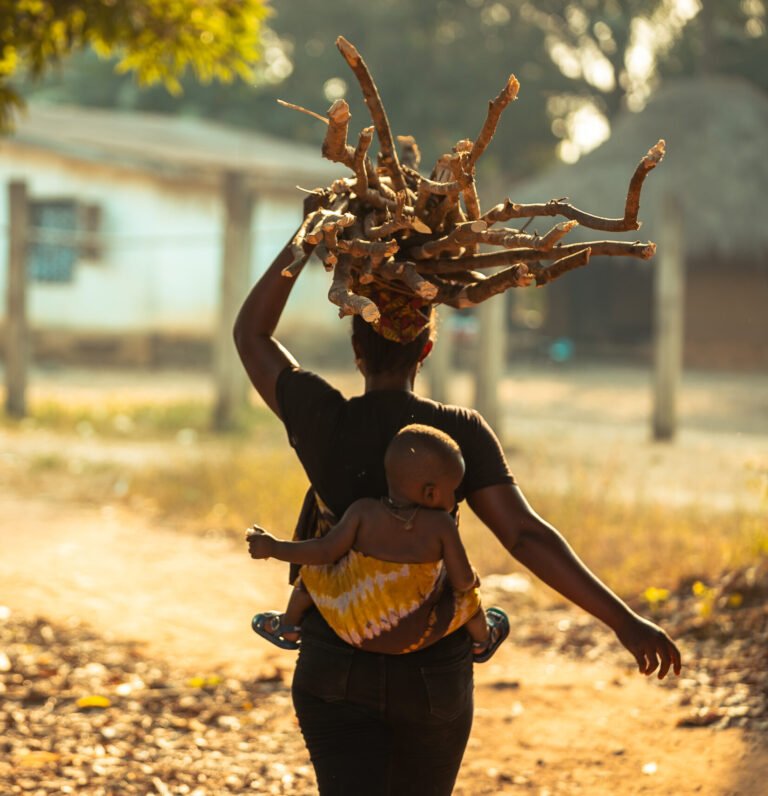
Hannah is 56 years old and lives in Moyamba with her children. Before she received her DelAgua cookstove, the women in her village had a name for her. They called her “Mammy Busy.”
This name was given to her to reflect her noticeable absence from community life within the village. She was previously too tired to socialise following the burden of cooking.
Today she has a new name. Her neighbours call her “Mammy DelAgua.”
Since the DelAgua stove arrived in her home, she has become the woman in her community who explains the project to others. She attends meetings at chiefdom level. She sits with her grandchildren and tells them stories.
Listen to ‘Mammy DelAgua’ explain more >>
Across all six groups and every participant, the immediate change women describe is the simplest. Wood is collected less often, used in smaller quantities, and lasts longer; meals cook more quickly.
Before the stove, wood collection was a daily and arduous task. Children and mothers walked long distances into the bush, often after school.
For a smaller but meaningful subset of women, the time saving also converts directly into cash saved. Women who purchased wood describe a halving or more of their weekly outlay.
Every subsequent finding in this report is related directly to these fewer hours spent collecting and cooking and, in some cases, fewer Leones spent.
The first change women describe is physical. Smoke, heavy loads, bent postures, burns, and the low-grade psychological strain of always-not-enough-wood have been lifted. Across the six transcripts, this is the most universally attested theme after the time saving itself.
Physical Relief
Women describe the three-stone fire in strikingly physical terms. A mother of six in Moyamba: “The smoke was everywhere, it filled my eyes until they turned red and watery, cough nonstop, and sometimes I feel dizzy and weak after preparing the meal.”
With the DelAgua stove, women report these symptoms resolved or substantially reduced. Women claimed to experience reduced red and watery eyes, coughing, dizziness, joint and back pain, and burns. Faces, hands and pots are no longer blackened; one woman reports the benefit of having “stopped scrubbing the pots so much”, a daily laborious task.
Rest and Energy Recovered
Women repeatedly describe the lifting of the cumulative tiredness that the three-stone routine imposed. “My body no longer aches like before… Life feels lighter,” said a mother of six in Moyamba.
Peace of Mind
Running through the wellbeing theme – and impossible to ignore – is a distinctive, repeated phrase: “peace of mind.” It appears most frequently in the elderly Koinadugu transcript, where four of five respondents use it unprompted.
The phrase names something that the study’s three-capital frame does not cleanly capture: the absence of the low-grade daily anxiety of insufficient fuel, which leads to angry, hungry children, late meals, secret-society restrictions, and constant exhaustion. It sits within human capital, but it is worth foregrounding. For several women – not only the elderly – it is the single change that matters most.
Using the traditional three stones requires a lot bending and kneeling. The Livɛ Fyn stove does not need that. Now I can peacefully sit in my doorway and cook.
Elderly respondent, Moyamba
The most important change for me is peace of mind. There is nothing greater than peace of mind.
Elderly respondent, Koinadugu
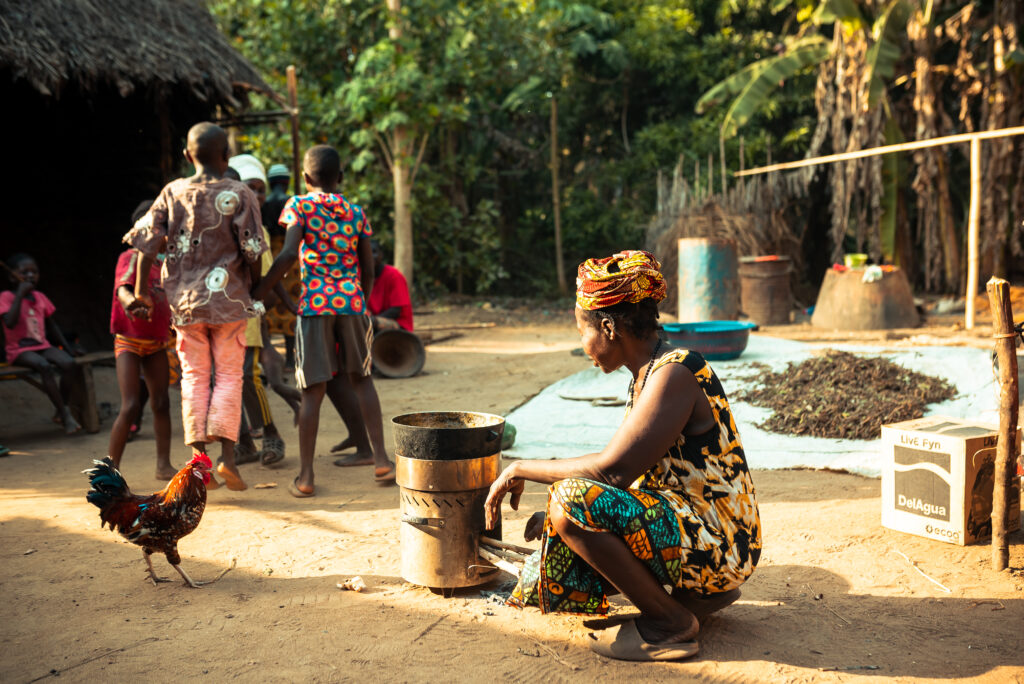
I use my remaining time to take care of my children at home, I do laundry, cook and make sure my children study after school.
Mother of three, Moyamba
The reclaimed time flows, in the women’s accounts, first to their families. Across all six groups, women describe being more present with their children, not solely physically, but in a more attentive and patient manner. Three sub-themes emerge.
Greater Presence
General presence with children and family is described in every group.
Several women describe family meals changing in both timing and tone. “My family now eats earlier and better,” said one. “Everybody can now eat early. Life Changing,” said another. In a Moyamba group, one respondent describes sitting with her co-wife in the evening to plan household decisions together, indicating a new collaborative financial practice she attributes to the time the stove has freed.
Schooling Preserved
A repeatedly mentioned outcome is that children’s schooling is no longer interrupted by wood collection.
Mothers describe actively monitoring homework, checking notebooks and reviewing notes.
The End of a Daily Conflict
The most textured and, in some ways, most striking sub-theme is one that emerged repeatedly: relief at no longer having to pressure, shout at, or force children to collect wood. Several mothers describe this as a source of prior distress now lifted.
The data here is stronger than the original research plan anticipated. Women in these six groups are not principally resting with their reclaimed time. They are using significant portions of it for productive and income-generating activity. Three sub-threads carry the theme.
More Time For Production
Farming, gardening, and trading expand in every group. Women describe arriving earlier at the farm, staying later, tending crops more carefully.
A distinctive practice emerges in both districts: carrying the portable stove to the farmland itself and cooking there. This extends productive time directly.
Trading at market also increases.
New Enterprise and Skills
Several women describe activities that did not exist in their lives before the stove. Soap-making appears repeatedly in Koinadugu.
How the Money is Used
Across the groups, income earned or saved flows to a consistent pattern of uses: school fees (mentioned in five of the six groups), family food, seed reinvestment, business capital, and, for some, health savings.
Economic activity is described across all six groups, but is most pronounced among women with fewer children (with more scope for independent enterprise) and among elderly women in Koinadugu (where wood-purchase savings matter most).
Before receiving the DelAgua stove I was not spending all day on my farmland and for that reason the pest (Monkeys) usually ate up all my ground nuts I planted. But since I received my DelAgua stove I sometimes carry it to my farm, after work I cook there; that helps me to spend more time watching and caring for my crops and prevents the pest from destroying it.
Mother of three, Koinadugu
I have more time now after working from the farm to learn how to make soap for sale, I now use the money to pay my children school bills and solve some issues at home.
Mother of three, Koinadugu
Beyond family and farm, women describe greater access to a wider community life: monthly women’s gatherings, Village Savings Groups, religious practice, chiefdom meetings, visits to neighbours and friends.
Women’s Collective Spaces
Every group describes expanded participation in women’s meetings. “I now have time to visit other women and attend women gathering,” said one Moyamba respondent, a pattern repeated throughout the Koinadugu transcripts.
Religious and Spiritual Life
Religious practice such as attending mosque or church, praying on time appears in every group, and is particularly prominent among the elderly.
Voice and Leadership
The reclaimed time supports something more than participation for elderly women in particular, leadership. One women describes: extended visits to friends, longer time spent at neighbours’ homes and fuller attendance at community welfare meetings.
“Mammy DelAgua” explains more about the leadership role she plays in her community. >>
As soon as I return from the farm, I use it to cook, and after cooking, I still have time to visit my friends in their homes.
Elderly respondent, Koinadugu

My family now eats earlier and better. I also feel like I am developing myself more than just surviving.
Mother of six, Moyamba
Several women, across several groups, describe something that goes beyond time saved or activity added. They describe a shift in their relationship to their own lives.
Control & Freedom
One mother of six in Moyamba describes; “I have enough time to do extra activities like looking after my garden, resting or even just sitting with the kids.” Freedom, in her usage, is the ability to choose among activities rather than being constrained to a single one.
Development, Not Survival
One mother in Moyamba describes the change to another woman who does not yet have a stove: “It’s not just easy cooking, it’s easy living.” These quotes hint at self-actualization and pride in the family.
A New Role
For some women, the shift is experienced as an identity change. One respondent explicitly described her new sense of belonging: “This has help me feel belong in the society and have a saying.”
Another: “It has given us back our joy.” The phrase “life feels lighter” recurs across multiple groups.
The question this research set out to answer was a narrow one: once the DelAgua cookstove saves women time, what do they do with it?
The answer appears to be broader than the question.
They rest. They farm, they trade, they make soap. They sit with their children and help with homework. They go to mosque or church on time. They attend chiefdom meetings. They stop shouting at their children to go for wood. They cook indoors during secret society periods and prepare meals during Ramadan without stress. The cookstove helps women feel, in their own words, lighter, freer, and more in control of their days.
The greatest perceived benefit of the cookstove varied considerably across demographic groups. Women with fewer children most emphasised gains in economic capital, particularly through increased opportunities for income-generating activities. In contrast, women with more than six children most strongly valued improvements in human capital, especially the additional time and energy available for rest and recovery from physically demanding domestic labour. Elderly women, many of whom were no longer primarily responsible for childcare, highlighted social capital through participation in community life. This included greater involvement in social and religious gatherings, as well as increased engagement in local leadership and decision-making roles.
This report demonstrates that the impact of the Livɛ Fyn programme is not just a quantitative one, it is, in significant part, a qualitative one that goes beyond the metric tonnes of CO2 saved that allows the project to be financed. What the cookstove does for these women and their families is not only measurable in hours saved or kilograms of wood reduced or their CO₂-equivalent, it is also measurable in the richly woven tapestry of their entire lives and in language the women themselves choose when they describe the difference.
Get in touch with DelAgua’s Chief Technology Officer to discover more about DelAgua’s impact in Sierra Leone.
FOLLOW US ON: