UNDERSTANDING THE IMPACT OF THE TUBEHO NEZA PROGRAMME ON COMMUNITY HEALTH WORKERS

Research findings from large scale study conducted in Rwanda between

November - December 2024

UNDERSTANDING THE IMPACT OF THE TUBEHO NEZA PROGRAMME ON COMMUNITY HEALTH WORKERS

Introduction

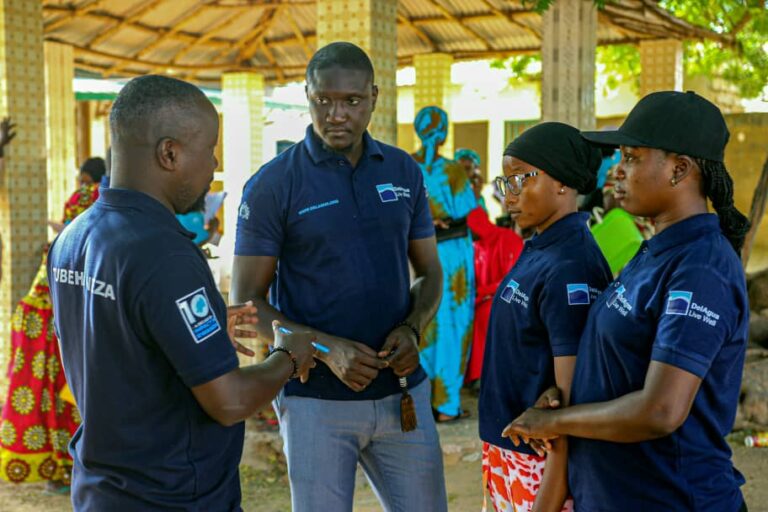
Community Health Workers (CHWs) are vital frontline full-time volunteers of the Ministry of Health within the Rwandan healthcare system and deliver essential health services in the community at the village level. For DelAgua, CHWs are the frontline of operations. Their involvement in DelAgua’s Tubeho Neza project extends beyond healthcare, as they are integral to the processes of stove distributions and household visits (HHVs), and other critical stages of project implementation. The inclusion of CHWs in these roles not only leverages their established trust within communities but also enhances the overall effectiveness and reach of the project. CHWs always come from the area in which they operate. They are known members of the community, giving the programme a starting position of trust. This position of trust allows more effective stove education programmes to be delivered, meaning more effective behaviour change, and ultimately more effective stove usage uptake. This study was commissioned to develop DelAgua’s understanding of how CHWs may experience improvements to their lives as a result of working for DelAgua.

Research Design

A mixed methods approach was designed, with a large scale quantitative survey sent to 821 CHWs with results analysed and purposive sampling utilisied to follow up with a qualitative interview of identified CHWs. The survey included newly recruited and experienced workers, with questions adapted according to the length of time working with DelAgua. The survey was sent via the DelAgua smartphones which CHWs use for household visits.

Quantitative Survey

  • The survey reached 821 CHWs.
  • This included CHWs of varying work durations (<3 months, 3–12 months, 1–3 years, >3 years) and all geographic locations.

Qualitative Survey

  • A smaller subset was chosen from 6 sectors of two districts (Gakenke District in Northern Province and Rubavu District in Western Province) to allow for in-depth qualitative analysis.
  • The selection was based on identifying respondents from 6 sectors with particularly interesting responses, ensuring diversity in work duration and experiences.

Overview of Impact

The research provides insights into the broader effects, beyond stove beneficiaries, of DelAgua’s activities on communities, particularly in terms of how and to what extent these initiatives have positively influenced the lives of CHWs and the communities they serve.

The commonly identified themes include:

  • Improvements in income, where CHWs report enhanced financial stability.
  • Employability; skills, with significant gains in practical knowledge and confidence to apply their training.
  • Social interaction, highlighted by strengthened relationships, trust, and visibility within their communities.
  • Empowerment, particularly for women and marginalized groups, reflected in improved social standing, greater leadership opportunities,
    and increased influence within their communities.

The Role of the Community Health Worker

1

DelAgua works with district authorities who liase with CHW coordinators to shortlist CHWs for DelAgua role.

2

DelAgua selects CHWs. They receive 3 days’ training and get their own stove to experience benefits first-hand.

3

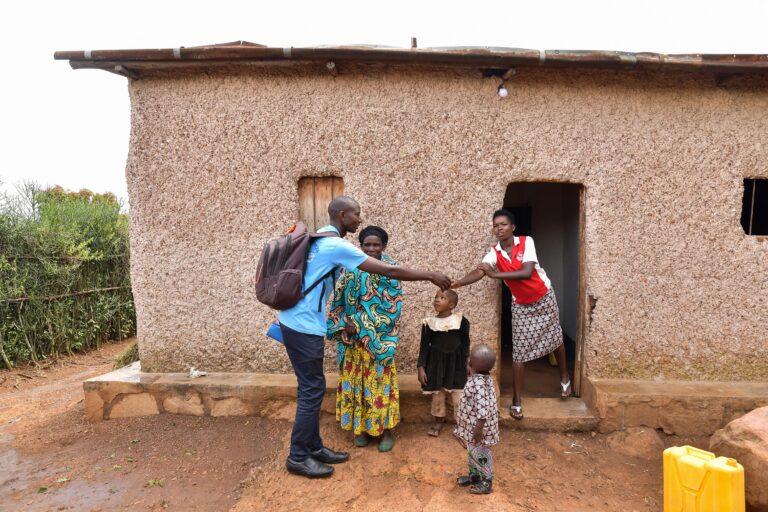
CHWs help to distribute stoves to their community.
4

After distribution, CHWs visit each household.

5

Barcode on stove is scanned to track household responses across surveys and stove photographed in situ.

6

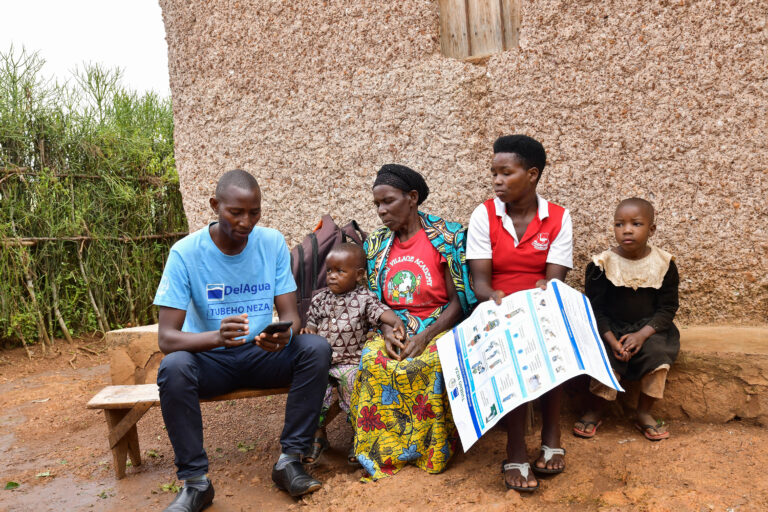
CHWs educate families on how, why and where to use stoves.

7

Instructional picture flipbook used for household education, ensuring consistent delivery.

8

125 question Household Survey conducted using DelAgua Smartphone App.
9

Household visits to every beneficiary conducted twice a year for 10-year life of the stove to continue to track stove usage, reiterate health benefits and provide support.

10

Annual refresher training given to CHWs.
Income

Beyond transforming the communities they serve, CHWs also experience life-changing benefits themselves by working with DelAgua. The income they earn from their work with DelAgua provides opportunities to invest in their futures—whether by purchasing a cow, which symbolises wealth in Rwandan culture, or by paying school fees to secure a better education for their children. This financial stability not only improves their own livelihoods but also strengthens the overall resilience of their families and communities.

Female respondents perceived a slightly greater improvement in income (63.22%) compared to males (60.77%). This indicates that, for women, the program benefits could exceed usual expectations, leading to a stronger perception of improvement.

85%

of participants ranked DelAgua’s impact on ‘Having more money’ as ‘good’ or higher.

88%

of rankings for ‘Having increased stability in my life’, were ‘good’ or higher.

What the Boost in Income is Used for:

Covering Essential Needs

The most frequent and immediate impact of income improvements is the ability to reliably meet essential needs. The increased financial stability allows CHWs to afford necessities that were previously difficult to manage.

  • Education: Several CHWs recounted how they can now afford school fees for their children, ensuring their access to education and a brighter future. Many rural households do not earn enough monthly income to comfortably afford school fees and having an extra income goes a long way in helping parents raise the school fees needed.
  • Household Essentials: The income also enabled CHWs to purchase necessary items like mattresses for their children, improving their well being, comfort and living standards within their homes.
  • Basic utilities like electricity connection, water tanks, clothing etc: One CHW shared how she could now afford an electricity subscription, bringing significant improvements to their daily life.
  • Healthcare: Rwanda’s Community Based Health Insurance (Mutuelle de santé) requires households to contribute 3,000 Rfw ($2.14) per person per year. For an average rural household size of 4, this totals12,000 Rfw ($8.55). Many households still struggle to pay this in one installment as it competes with other basic necessities needed in a home. Earning an extra income allows CHWs to save towards paying insurance for the whole family.

The very first time I worked with DelAgua, I had 2 children in school, and I managed to pay the school fees for those children. The second time I worked with DelAgua, I managed to buy a mattress for my children. They are now sleeping comfortably on a mattress.

Investing in Assets

Beyond immediate needs, the income from DelAgua empowers CHWs to make significant investments, enhancing their long-term financial security and overall well-being.

  • Livestock: Purchasing livestock like pigs, goats, and even cows emerged as a recurring theme. These animals serve as valuable assets, providing a source of food, potential income through breeding and selling, and a safety net in times of crisis. In Rwandan culture, owning a cow symbolizes wealth and power. For many CHWs, being able to buy a cow is as much a social status boost as it is an economic one.
  • Land Ownership: One CHW described how the income facilitated purchasing a plot of land, a significant achievement representing
    long-term security.
  • Technology: The ability to purchase a smartphone was a source of pride for several CHWs. This investment not only facilitates communication and access to information but also represents a symbol of their economic progress and enhanced employability.

Improving Households and Living Conditions

Many CHWs reported using their income to renovate their homes, enhancing their living conditions and overall quality of life.

  • House Construction and Renovation: many described using the income to renovate their homes. Whether that was acquiring new materials for building a new home entirely or being able to improve areas such
    as living rooms and bedrooms.
  • Access to Clean Water: 2 out of 12 interviewed CHWs shared how they were now able to afford to bring water supply to their homes, eliminating the burden of fetching water from a distance and improving hygiene and convenience.

I used to live in a small house but from the payments I got from DelAgua, I started a project of building my own good house. At this point, I have finished buying the materials for construction and I am ready to start building my own good house.

Skills & Employability

When asked about the biggest changes they experienced since joining DelAgua, knowledge improvement was the most frequently cited benefit. CHWs consistently mention gaining new insights into environmental conservation, health advocacy, and stove usage, which highlights how their roles have provided them with technical and practical knowledge.

This confidence is not limited to technical or health-related knowledge but extends to their ability to engage socially, collaborate with government officials, and serve as trusted community advisors. The feedback reflects a broader theme of empowerment, as CHWs are not only gaining new skills but also leveraging them to create tangible positive changes in their communities.

Technological Proficiency: The use of smartphones for data collection, reporting, and communication played a crucial role in boosting CHWs’ technological skills. CHWs who previously had limited or no experience with smartphones expressed a sense of accomplishment in learning to use this technology.
Comprehensive Understanding of Clean Cooking and Stove Usage: Through DelAgua’s training programs, CHWs gained a deeper understanding of the benefits of clean cooking and the practical aspects of using the Tubeho Neza stoves. Tying in with SDG 4.7 (quality education around sustainable development).

Working with DelAgua has brought me a lot of skills. The first one is I have learned how to use smartphones, which is something I think will help me keep working with improved technologies.

95%

of CHWs reported that the skills they learned have contributed to their employability.

98%

of CHWs agree that the skills are useful on a day-to-day basis.

> 95%

of participants claimed to have ‘high confidence’.

Social Interaction

98% females & 99% males

report developing strong relationships with Cell and Sector Government Officials.

> 85%

of respondents rated DelAgua’s impact on ‘Having a busy and active social life’ as ‘Good’ or higher. Almost 50% of respondents rated the impact as ‘Excellent’.

CHWs frequently mentioned improvements in their communication and interpersonal skills, attributing this growth to the nature of their work, which involved extensive interaction with community members.

Building Respect and Trust:
The survey data reveals that a vast majority of CHWs strongly agree with statements reflecting positive social change, including people respecting them (97.91% of females and 98.85% of males), valuing their input (98.83% for females and 99.64% for males), and considering them community leaders (97.17% for females and 98.18% males).

Regular interactions with local authorities have further improved their ability to navigate professional relationships and represent the interests of their communities.

Empowerment

Being part of the project empowers those CHWs who are part of marginalized social groups, for example women and young people.

>98%

of female CHWs agreed that working with DelAgua contributed to employability, daily usefulness, and improved social interactions.

The analysis shows that women experienced greater perceived improvements in financial stability and employability, representing a significant break from traditional gender norms. They are seen as knowledgeable and capable individuals who contribute to the economic well-being of their families.

87% male & 86% female

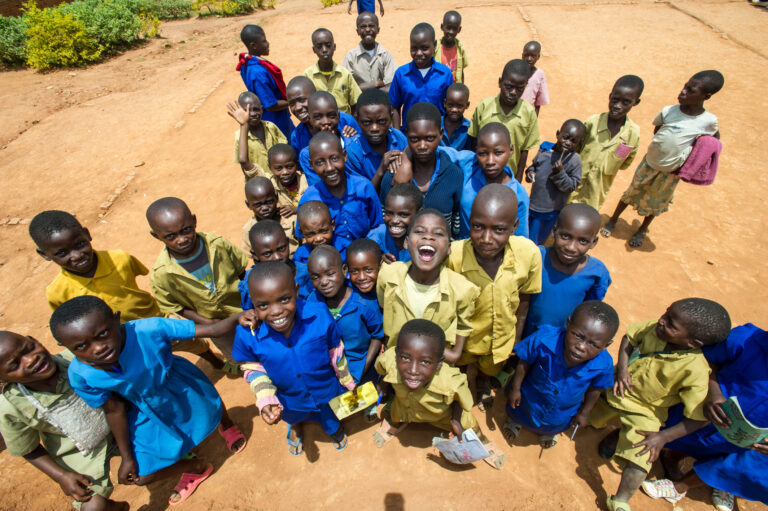
respondents agree that young CWHs have benefited significantly from DelAgua’s project, especially because of the high unemployment in rural areas.

DelAgua’s Tubeho Neza project significantly improves CHWs’ livelihoods, fostering economic stability, skill development, and empowerment. These impacts extend beyond individual CHWs, enhancing community well-being and advancing sustainable development goals. To date more than 7,000 Community Health Workers have worked with DelAgua to deliver Tubeho Neza across Rwanda.

After the first payment I received from DelAgua, I managed to buy a pig. With the second payment, I bought a goat, and after that, I managed to buy a cow. And when I am at work, like working for DelAgua, I can afford to employ another person to look after my animals.

Find Out More

Get in touch with DelAgua’s Chief Technology Officer to discover more about  Live Well’s impact in Rwanda, The Gambia and Sierra Leone.Â