
During May DelAgua participated in the East Africa Carbon Markets Forum, IEA Clean Cooking in Africa Summit, Argus Asia Carbon Conference and the Sustainable Skies World Summit.
These events provide a much-needed platform for key stakeholders in Government, Regulation and Private sector to discuss actionable solutions to the challenges that hinder both clean cooking and carbon market sectors.
In its participation, DelAgua shared insights and expertise from our decade long operation of the Live Well programme and put forward recommendations to address underlying project delivery & carbon market integrity concerns.
The inaugural East Africa Carbon Markets Forum in Kampala unpacked the latest regional developments in the carbon market including benchmarking from other regions. It is worth noting that East Africa governments have made commendable efforts in developing policies that prioritize access to clean and affordable energy, limit deforestation and biodiversity loss.
Our Group COO Euan McDougall who represented DelAgua at the Forum said “The East Africa bloc has the potential to lead the charge for participation and investment, as evidenced by the several successful carbon development projects operating across the region. Various project developers and institutions conducted in-depth workshops on the event sidelines to share insights on climate financing, collaboration and untapped opportunities within the sector. Overall, developers are keen on ensuring compliance and integrity of their projects to realize maximum impact. We now look to our partners in Government and regulation for the necessary support.”
The current regulatory framework gaps that impede Africa’s participation in the global carbon market require more engagement. Global standard-setting bodies and regulators must continuously collaborate to advance transparent and standardized frameworks for measuring, verifying, and trading carbon credits.
If addressed, Africa can reap immense benefits from carbon trading under Article 6 of the Paris Agreement.
This message was reiterated at the Clean Cooking in Africa summit organized by the International Energy Agency (IEA). During this high-level summit, over 1000 delegates from governments, private sector & development partners endorsed the Clean Cooking Declaration, which mobilized $2.2 billion in public and private sector funding, financing and investment for clean cooking.
Speaking at the summit, Sierra Leone’s President Julius Maada Bio highlighted the dire situation on access to clean cooking. “In the context of Sierra Leone, the 2023 SDG Tracking Report shows that Sierra Leone’s access to clean fuels and technologies for cooking was at only 0.8% in 2021.”
He added, “The absence of access to clean cooking solutions significantly affects Sierra Leone’s economy, with estimated annual costs of inaction totaling US$4.7 billion. These costs stem from adverse impacts on various fronts: women’s lost productivity (US$1.4 billion), health (US$3.2 billion), and climate change impacts (US$0.2 billion).
In order to address this crisis, DelAgua has partnered with the Ministry of Energy in Sierra Leone to provide high quality improved clean cookstoves, free of charge, to 500,000 rural households across the country. These distributions are followed by one-on-one household visits that drive behaviour change through education of clean cooking practices and subsequent support for the stove’s 10-year lifespan.
Over the past year, 26,750 stoves have been distributed so far; reaching 200,625 people.
We provide a wood fuelled improved cookstove because for the rural communities we serve, wood is the only fuel they have access to and can afford in the long-term. This is true for around 90% of the rural populations in sub-Saharan Africa.
By providing a stove that serves the reality of their needs and reduces wood use by 71%, we ensure that this huge population dependent on wood fuel is not left behind in gaining access to energy efficient cooking.
Advancing the clean cooking agenda requires, among other things, sustainable financing which can be achieved through carbon markets that have the potential to scale climate action through increased investments and funding options.
While project developers actively engage in market developments to ensure compliance, an increase in carbon credit generation would also require policy development in the Global North to drive demand for these credits. This will contribute to the sale of Article 6 credits that satisfy Africa’s nationally determined contributions (NDCs) and other emissions reductions objectives.
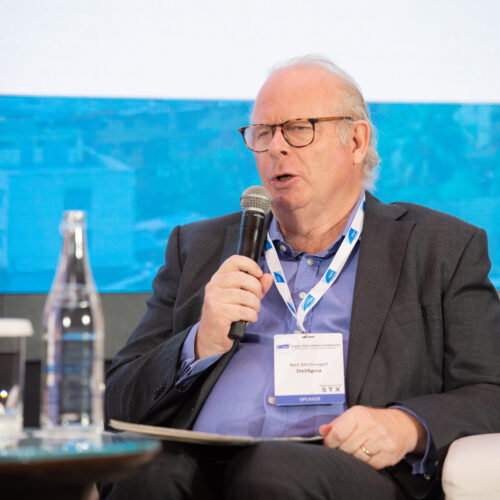
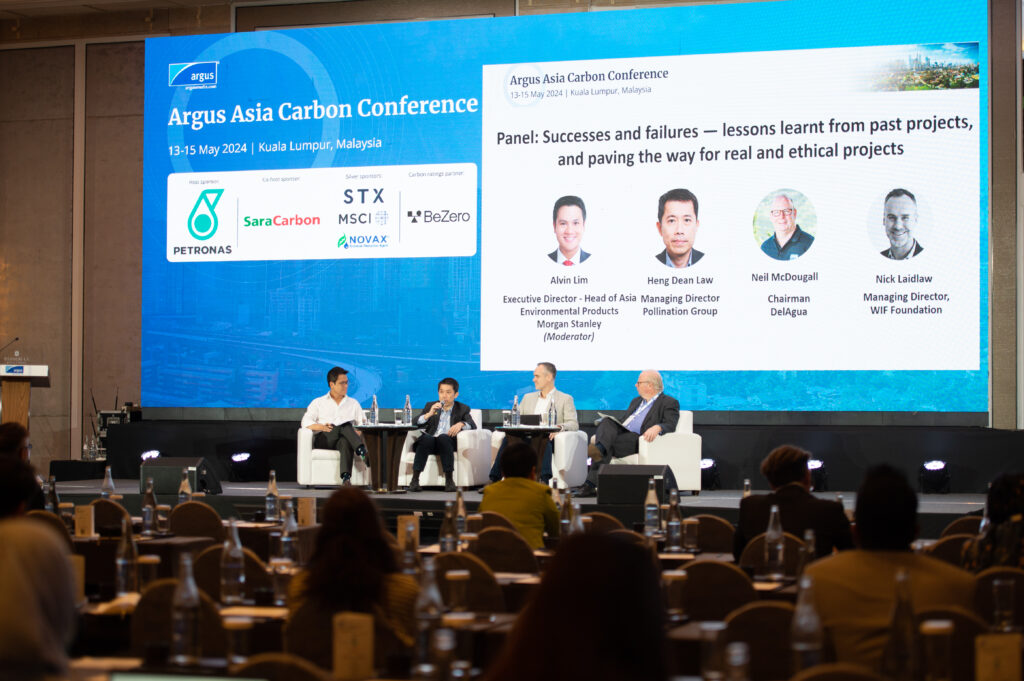
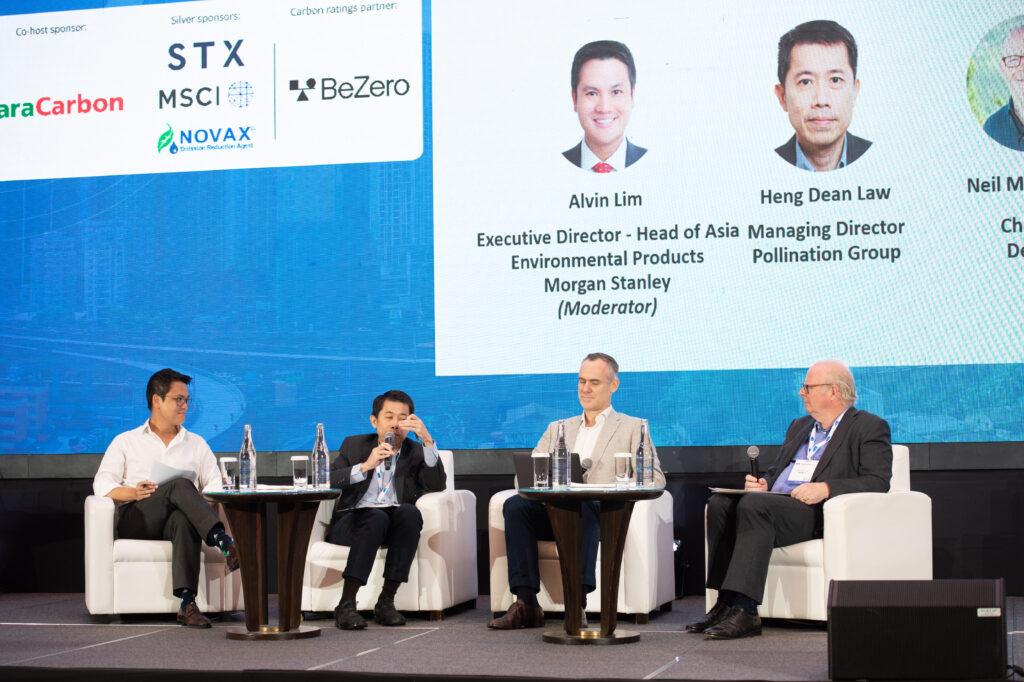
In Kuala Lumpur at the Argus Asia Carbon Conference, our Group Chairman Neil McDougall spoke on panel discussing ‘Successes and failures — lessons learnt from past projects and paving the way for real and ethical projects’. He explained DelAgua’s strategies that ensure the authenticity and ethicality of our carbon projects and valuable lessons that inform future endeavors.
“It was great to see Argus Asia Carbon emphasise quality and integrity this year. These values are central to everything we do at DelAgua, and I was proud to see the Live Well project recognized as the best in the sector,” Neil added.
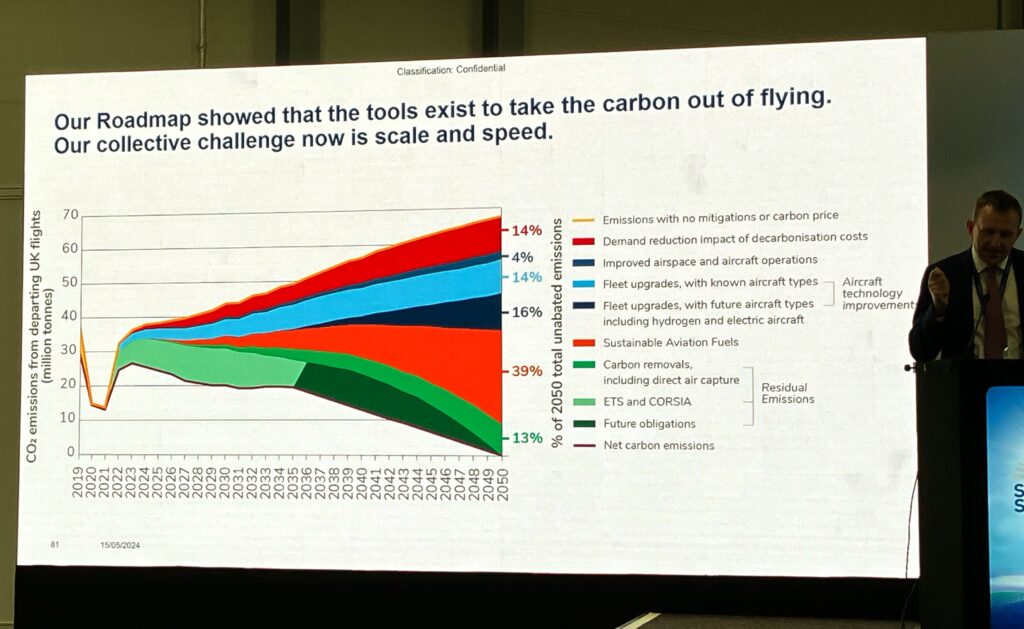
The Sustainable Skies World Summit focused discussions on how to achieve net-zero emissions by 2050. Scale and speed in innovation were highlighted as the key factors to drive progress on Sustainable Aviation Fuel (SAF), fuel efficiencies of newest fleets and new technologies being developed.
These innovations will take time and CORSIA plays a major part in reaching net zero. Since securing landmark LoAs with the Rwandan Government, DelAgua offers the only CA tagged credits on Verra and is among only a handful of Article 6 projects globally . This means our Rwanda credits are aligned with CORSIA phase one and will be eligible once Verra is added as a designated registry. Market reports indicate that CORSIA demand is likely to outstrip supply by 2030.
It remains to be seen how governments, regulators and carbon developers will implement what has been discussed over the past weeks to create a stronger carbon market ecosystem that benefits all stakeholders and the communities involved.
DelAgua welcomes all the commitments demonstrated at these events, particularly the Clean Cooking declaration, whose coordinated approach will make significant progress in three critical pillars: financing, policies, and partnerships.
Additionally, we look forward to collaboration on new crediting methodologies and policies that will bring consensus on principles of integrity and sustainability.