
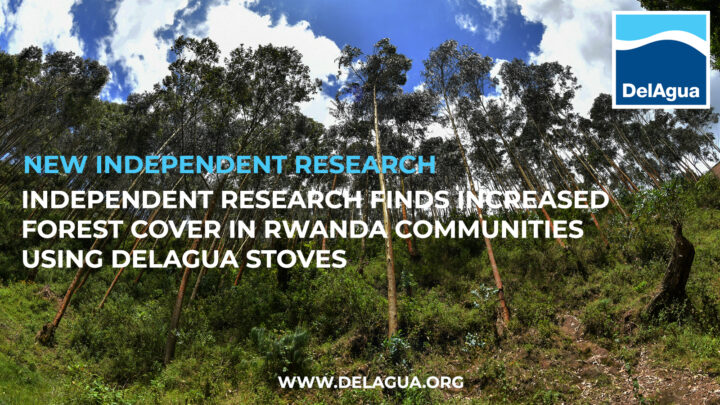
Academic study finds measurable gains in forest cover and vegetation associated with DelAgua’s clean cooking programme, providing new evidence of the environmental impact of large-scale improved cookstove programme.
The study, The Forest Cover Impacts of Improved Cookstoves, examined the impact of DelAgua’s Tubeho Neza cookstove programme on land cover across Rwanda. Conducted by researchers from the University of Victoria, Trinity University and Bryn Mawr College, the research used more than two decades of satellite data and two econometric approaches to assess changes in forest and vegetation cover.
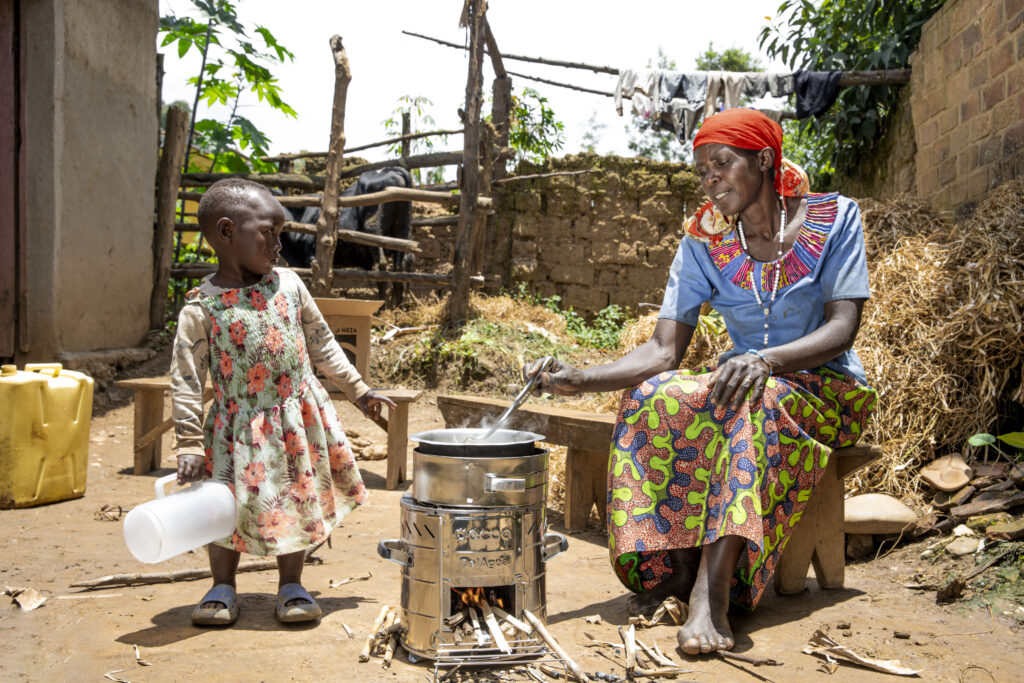
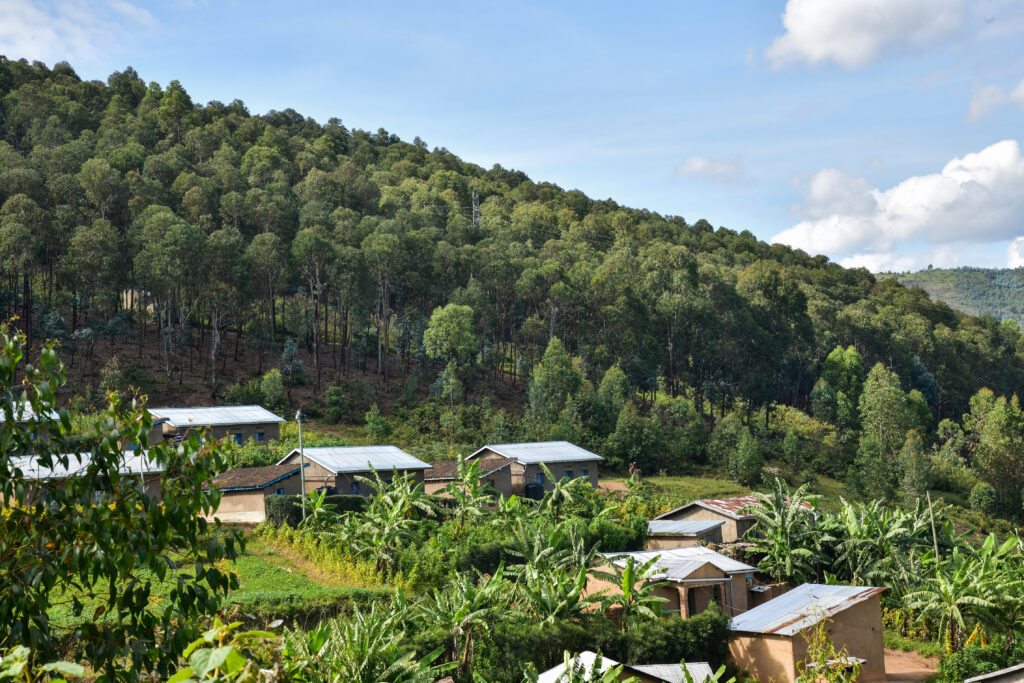
While a range of government and non-governmental initiatives have contributed to forest conservation efforts in Rwanda, the study’s methodology was designed to isolate the specific effect of DelAgua’s cookstove programme on forest cover. The researchers found a 0.61 percentage point increase in forest cover in areas receiving DelAgua cookstoves; equivalent to a 4.4% increase relative to the average forest cover. The strongest forest gains were recorded in areas that already had relatively healthy tree cover.
The study confirms that DelAgua’s carbon financed cookstove programme in Rwanda delivers measurable benefits for the country’s forests and provides important new evidence of the wider environmental benefits of improved cookstoves.
Key findings
• Forest cover increased by 4.4% in areas that received DelAgua cookstoves, a 0.61 percentage point increase in tree canopy.
• Forest gains grew over time. In the years following stove distribution, forest cover averaged 1.59 percentage points higher than in areas without stoves, equivalent to an additional 0.18 km² of forest per area studied; approximately 25 football pitches.
• By year seven, forest gains had nearly doubled, with forest cover 3.05 percentage points higher than in areas without stoves, equivalent to approximately 0.35 km² of additional forest; approximately 48 football pitches.
• Other plant life increased by 1.26 percentage points, including shrubs, grassland and areas with scattered trees.
• Land without vegetation decreased by 1.87 percentage points, showing that areas with no plant cover are turning green again.
• Households also benefited, with qualitative research reporting a reduction in firewood expenditure from around RWF 10,000 to RWF 3,000–4,000, and children less likely to miss school to collect firewood.
The research sets an important benchmark for the clean cooking sector and the carbon markets that support it. The results hold across two independent satellite sources and two econometric methods, strengthening the environmental basis on which cookstove carbon credit methodologies rest. Importantly, the gains in non-forest vegetation recorded in more degraded areas do not come at the expense of existing forest, an insight that is directly relevant for businesses and supply chains working towards compliance with the EU Deforestation Regulation (EUDR).
Furthermore, the study validates DelAgua’s delivery model: high uptake rates show that free distribution, supported by community engagement and education through Community Health Workers, is an effective way to get clean cooking technology into homes and encourage consistent use.
“Beyond health and time savings our research provides evidence that large-scale cookstove programmes can measurably change land-cover including actual forest gains in the right conditions. It contributes data- driven evidence as to how carbon finance is directed, and how we tackle deforestation” Dr. Abubakr Ayesh, Trinity University, US
“This is the first academic study directly linking a carbon financed cookstove programme to increased forest cover. For the carbon market, this is exactly the kind of independent, rigorous evidence that builds confidence in high-quality cookstove projects. The results are grounded in more than two decades of satellite data, tested across multiple methods. This is the standard we hold ourselves to, and we will continue to invest in research that shows the impact of our work.” David Kitt, CTO, DelAgua
These findings mark an important contribution to the global conversation on carbon credit integrity, demonstrating that well designed cookstove programmes operating at scale can deliver real, verifiable change on the ground. DelAgua has distributed more than 1.9 million stoves in Rwanda, reaching over 7 million Rwandans.
About the research
The Forest Cover Impacts of Improved Cookstoves was conducted by Abubakr Ayesh, Colette Salemi and Sebastian Anti, researchers affiliated with the University of Victoria, Trinity University and Bryn Mawr College. The study examines the effects of DelAgua’s Tubeho Neza cookstove distribution programme on land cover in Rwanda, using two satellite data sources and two econometric methodologies.
About DelAgua
DelAgua is a social enterprise with more than a decade of experience implementing large scale carbon development projects that transform the lives of rural households in Least Developed Countries across Africa. The Live Well programme exclusively targets rural communities who are otherwise unable to afford the transition to clean cooking. More than 2.3 million improved cookstoves have been distributed across Rwanda, The Gambia, Sierra Leone and Uganda. The programme generates independently verified carbon credits that fund continued scale and innovation.
For further information contact:
Kate Bruges, Communications Director, [email protected]
David Kitt, Chief Technology Officer, [email protected]